do you think genres are timeless? can we still label films?
In most cases, we are still able to label films, such as action and sci-fi, Commando and Moon respectively. However, there are certain films that defy conventions of genres making them difficult to put into a specific genre, examples being Melancholia where it is mainly a drama yet in a sci-fi setting. Over time, people's opinions of the world changes so their opinions on films change aswell.
why do you think hybrid genres are developing so much?
Hybrid genres are developing because we've already looked at the basics of each genre so people are experimenting with genres to create new and unique. Example being Cowboys and Aliens which combines Western and sci-fi, and Avatar, which combines sci-fi and romance.
choose one of your products and determine how it does/doesn't conform to a genre
In terms of genre being defined by setting, the thriller project has a busy post-modern setting, this allows the crime to be committed in an enviroment where the assassin can be unseen, this setting also presents it as more a political thriller, contradicting with the conventions of a classic thriller.
Then there is the theme and topic, which can't be seen so much as it is only the beginning of a film, but the scene was designed to follow on into a story of corruption within the political stance of Great Britain.
And finally the format. The way the film is represented with guns and murder and everything, shows the high level of risk being played with by few people. Shot in widescreen with various effects such as sped up footage, filters and techno soundtrack exaggerate the post modern nature of the political thriller.
So the project does conform to a specific genre as it meets the conventions of a thriller.
The project is mainly a subgenre of a political thriller as it deals with current affairs in an escapist form. It has a Ying and a Yang, weapons, murder, mystery and conspiracy.
According to Janet Steiger, there are 4 ways to define a film. The first is a Id Ealist Method, or the predetermined standard of a film. The Second is the Empirical method, which is comparing it to other films. The third is social conventions, which are accepted by cultural expectations in society, and the fourth is the ironic hybridization, which is combining elements from different genres.
Id Ealist Method: the project is conventional as it is a political thriller, the conventions are met such as dealing with current affairs, keeping a keen eye on political stance etc.
Empirical Method: Influenced by the Bounre films (assasination, enigma), Spooks (style and keeping with current affairs), Ichi the Killer (stylistic effects) and JFK (style of assassination)
Social Conventions: clear line between good guy and bad guy, easy plot to grasp
Ironic Hybridization: just a thriller, nothing more
According to Robert Stam, genres can be defined by the performer. The persona acting is the same character each time and this helps the audience to know what to expect. The actors are central to the brief storyline, and add an extra layer to the setting and music.
John Turby says that genre is useful for purposes of marketing, target audience and critical review. If this film was marketed, it'd be very mysterious, following a sort of viral marketing where not much information is giving about the film. He also said that screenwriters may use genre basis as a way to determine plot or theme.
Showing posts with label tania. Show all posts
Showing posts with label tania. Show all posts
Tuesday, 26 April 2011

Wednesday, 6 April 2011
Uses and Gratification Theory
The uses and gratification theory says that people play an active role in choosing and using the media. They have a more active role in the communication process and people choose a media which is best for them. The theory assumes that the user has several choices to meet their needs. It is a popular approach to understand mass communication.
Funny Games
1) How Does The Film Break Expectations?
The genre of this is film is thriller therefore the conventions of a thriller is for the bad person to die at the end however in this film all the good characters died and the two bad characters remained alive and carried on torturing more people. Most thriller films have a positive end where the main character survives but in this film it ended negatively and all the good characters died. The narrative is not normal as the bad character talks to the audience making them feel involved in his acts rather then him talking to his people, this may make the audience feel confused.
2) What is he trying to make the audience feel about violence?
His trying to make us feel that violence is acceptable and normal. He doesn't show us what actually happens for example the shooting but he does create the fear from telling the audience what is going to happen next and whose going to die and because he told us what was going to happen instead of showing us its more effective for the audience as it makes them think more about the situation. He makes them play a game which involves them both dying therefore his showing that for him violence is fun.
3) Do you think it is intentional shock?
Yes, because Michael Hanetce says that the audience are passive and they are used to seeing violence, blood and gore. So by not showing this in this film it makes the audience feel shocked and they think more about the situation and think why it is acceptable to find violence entertaining.
The genre of this is film is thriller therefore the conventions of a thriller is for the bad person to die at the end however in this film all the good characters died and the two bad characters remained alive and carried on torturing more people. Most thriller films have a positive end where the main character survives but in this film it ended negatively and all the good characters died. The narrative is not normal as the bad character talks to the audience making them feel involved in his acts rather then him talking to his people, this may make the audience feel confused.
2) What is he trying to make the audience feel about violence?
His trying to make us feel that violence is acceptable and normal. He doesn't show us what actually happens for example the shooting but he does create the fear from telling the audience what is going to happen next and whose going to die and because he told us what was going to happen instead of showing us its more effective for the audience as it makes them think more about the situation. He makes them play a game which involves them both dying therefore his showing that for him violence is fun.
3) Do you think it is intentional shock?
Yes, because Michael Hanetce says that the audience are passive and they are used to seeing violence, blood and gore. So by not showing this in this film it makes the audience feel shocked and they think more about the situation and think why it is acceptable to find violence entertaining.
Tuesday, 5 April 2011
theories put into practice
Propp writes about the eight characters and he argues that narratives are driven by males. This theory is trye in the case of Max's thriller as the two main characters of the sequence were both males.

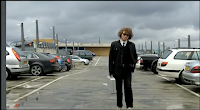 He also said all narratives feature the same eight character roles based on traditional tales, because it is two minutes we don't have all characters, but if we did carry on with this film we probably would seen at least 6 of the eight characters. In this sequence however we are already presented with the dispatcher (man character who gets shot) as his death sets the story in motion, his death will get the hero involved and thus the story begins. We are also presented with the villain (man character who shoots him) and his story will be revealed later but for now, he remains an enigma.
Propp also talk about story arcs, implying that each story has
preparation, complication, transference, struggle, return and recognition
at the moment, this sequence falls under preparation (something happens to set off his journey), but will later become a complication (hero struggles and needs help).
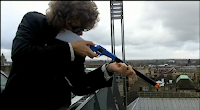 Strauss talks about binary opposites, suggesting that in narratives, every character has an opposite to then, a ying for a yang. In this sequence, we cleary has a brief binary opposite with the assassin and the target. Villain/hero, moral/immoral, weak/strong (cause assassin had a gun) and criminal/idealistic politician, rich/poor (as the politician is rich and the assassin is for hire)
Todorov says that each story has five stages
Equilibrium, Disruption of that order, Recognition that the disorder has occurred, Attempt to repair the damage and Return to a new equilibrium. This sequence has an equilibrium and a disruption of it but not the other three as the story doesn't progress any further.


In conclusion, most of the theories presented here are proven true for this sequence as it was only two minutes and followed many conventions of a thriller. It was quite difficult to present every segment of all the theories and if the film went further through the narrative, we would have included all of the segments of the theories.


 He also said all narratives feature the same eight character roles based on traditional tales, because it is two minutes we don't have all characters, but if we did carry on with this film we probably would seen at least 6 of the eight characters. In this sequence however we are already presented with the dispatcher (man character who gets shot) as his death sets the story in motion, his death will get the hero involved and thus the story begins. We are also presented with the villain (man character who shoots him) and his story will be revealed later but for now, he remains an enigma.
Propp also talk about story arcs, implying that each story has
preparation, complication, transference, struggle, return and recognition
at the moment, this sequence falls under preparation (something happens to set off his journey), but will later become a complication (hero struggles and needs help).
 Strauss talks about binary opposites, suggesting that in narratives, every character has an opposite to then, a ying for a yang. In this sequence, we cleary has a brief binary opposite with the assassin and the target. Villain/hero, moral/immoral, weak/strong (cause assassin had a gun) and criminal/idealistic politician, rich/poor (as the politician is rich and the assassin is for hire)
Todorov says that each story has five stages
Equilibrium, Disruption of that order, Recognition that the disorder has occurred, Attempt to repair the damage and Return to a new equilibrium. This sequence has an equilibrium and a disruption of it but not the other three as the story doesn't progress any further.


Friday, 1 April 2011
Batman Begins- Narrative theory structure
Vladimir Propp - 8 characters
Hero: Bruce Wayne
Villian: Ras Al Ghul
Doner: Alfred
False Hero: Ras Al Ghul
Dispatcher: Ras Al Ghul
Helper: Gordon
Princess: Rachel
Father: Rachel's mother
Vladimir's theory that all narratives feature the same 8 character roles based on traditional roles does seem to be true in this film as they all fit in together however the last character role of the princess' father was not present in this film. His other point that all narratives are driven by males is true For this film as the film is set in a male dominated society, with all roles that represent power or authority are played by males.
Levi Strauss:
His theory is that every narrative has binary opposites and this was shown in Batman Begins for example there was a :
Hero/Villain - Bruce & Ras Al Ghul
Rich/poor - Bruce's parents & the mugger
Young/old - Bruce & Alfred
Weak/Strong - Bruce & Ras Al Ghul
Moral/immoral - Bruce and Ras Al Ghul
Male/Female- Bruce and Rachel
Tzvetan Todorov:
He said the audience desires order, a beginning, middle and an end. He also said we want to see the underdog succeed.
equilibrium - Bruce is happy with parents
disruption - his parents get killed
bruce goes into exile
gets put into jail
recognition - meets ras al ghul and learns combat techniques
disruption - abandons league of shadows and returns to gotham
repair - becomes batman
new equilibrium - helps decrease crime in Gotham
Hero: Bruce Wayne
Villian: Ras Al Ghul
Doner: Alfred
False Hero: Ras Al Ghul
Dispatcher: Ras Al Ghul
Helper: Gordon
Princess: Rachel
Father: Rachel's mother
Vladimir's theory that all narratives feature the same 8 character roles based on traditional roles does seem to be true in this film as they all fit in together however the last character role of the princess' father was not present in this film. His other point that all narratives are driven by males is true For this film as the film is set in a male dominated society, with all roles that represent power or authority are played by males.
Levi Strauss:
His theory is that every narrative has binary opposites and this was shown in Batman Begins for example there was a :
Hero/Villain - Bruce & Ras Al Ghul
Rich/poor - Bruce's parents & the mugger
Young/old - Bruce & Alfred
Weak/Strong - Bruce & Ras Al Ghul
Moral/immoral - Bruce and Ras Al Ghul
Male/Female- Bruce and Rachel
Tzvetan Todorov:
He said the audience desires order, a beginning, middle and an end. He also said we want to see the underdog succeed.
equilibrium - Bruce is happy with parents
disruption - his parents get killed
bruce goes into exile
gets put into jail
recognition - meets ras al ghul and learns combat techniques
disruption - abandons league of shadows and returns to gotham
repair - becomes batman
new equilibrium - helps decrease crime in Gotham
Narrative
According to Vladimir Propp, character roles in narratives are driven by males and that all narrative featured the same eight character roles based on traditional tales
1) hero = (typically male)
2) villain =(rivals the hero)
3) doner = (provides hero with help)
4) false hero = (appears to be good but isn't)
5) dispatcher = (sends the hero on the quest)
6) helper = (goes with the hero)
7) princess = (hero is usually rewarded by marrying her)
8) the father

Toy Story 3
1) Woody
2) Lotso
3) All the other toys except for Buzz
4) Lotso
5) Andy's mum
6) Buzz
7) Bonnie
8)

Star Wars
1) Luke Skywalker
2) Darth Vader
3) Obi Wan Kenobi
4)
5) C3P0 + R2D2
6) Han Solo
7) Princess Leia
8)

Lord of the Rings
1)Frodo
2) Sauron
3)Gandalf
4)Gollum
5) Bilbo
6) Sam
7)
8)
1) hero = (typically male)
2) villain =(rivals the hero)
3) doner = (provides hero with help)
4) false hero = (appears to be good but isn't)
5) dispatcher = (sends the hero on the quest)
6) helper = (goes with the hero)
7) princess = (hero is usually rewarded by marrying her)
8) the father

Toy Story 3
1) Woody
2) Lotso
3) All the other toys except for Buzz
4) Lotso
5) Andy's mum
6) Buzz
7) Bonnie
8)

Star Wars
1) Luke Skywalker
2) Darth Vader
3) Obi Wan Kenobi
4)
5) C3P0 + R2D2
6) Han Solo
7) Princess Leia
8)

Lord of the Rings
1)Frodo
2) Sauron
3)Gandalf
4)Gollum
5) Bilbo
6) Sam
7)
8)
Wednesday, 30 March 2011
analysis of thriller project
thriller project
Micro elements:
Mise-en-scene:
costume: Max was wearing a black suit, gloves and glasses shows his hiding his appearance. Conventional to thrillers as Spooks or agents in political thrillers are normally dressed like this. Using conventions to make themes more obvious.
lighting: Outside was dull represents the mood of the scene. Thrillers are often moody and poignant and use visual representations to get this across, in this case, the weather
colours: mainly black, grey and navy blue represents the theme overall of the negative atmosphere.
props: gun, phone, suitcase, glasses and gloves, conventions of thriller, show he was on a task and the way these props were shown gives the audience the impression that there is more to be revealed about the character.
location: town centre, car park , busy atmosphere so the criminal doesn't get caught. Thrillers are often up to date, normally never set in the past, use current affairs for themes.
cinematography:
the camera shots varied , close ups showed the facial expressions which were mundane as its a serious task.
Long shots, when Max was walking in the car park , establishes the scene as the assassin has chosen a secluded area of the busy atmosphere to perform the assassination.
over the shoulder shot, creates suspense and point of view shot reveals the target. the Camera is mostly steady, going against conventions of modern thrillers which go for the shakey cam techniques.
Sound:
The soundtrack is very intense and reacts to what is going on in the scene. For example, when the film speeds up as Max walks towards the camera, the music subsides and a sound affect is played to emphasize this. As Max gets closer to killing the target (or James), the music gets louder until finally stopping to have the gun shot play over silence, this is soon followed by alot of sound affects being played as the camera tracks from the target to the assassin, and ends with the basic bass line which played throughout the scene. The soundtrack is very electronic, with no percussion whatsoever, applying to the modern nature of the film.
Editing:
Very basic cuts with drastic changes of speed in key places. Two stills with red filters are put before and after the long sped up tracking shot.
Special effects:
added a crosshair to point of view to make it seem more realistic.
Micro elements:
Mise-en-scene:
costume: Max was wearing a black suit, gloves and glasses shows his hiding his appearance. Conventional to thrillers as Spooks or agents in political thrillers are normally dressed like this. Using conventions to make themes more obvious.
lighting: Outside was dull represents the mood of the scene. Thrillers are often moody and poignant and use visual representations to get this across, in this case, the weather
colours: mainly black, grey and navy blue represents the theme overall of the negative atmosphere.
props: gun, phone, suitcase, glasses and gloves, conventions of thriller, show he was on a task and the way these props were shown gives the audience the impression that there is more to be revealed about the character.
location: town centre, car park , busy atmosphere so the criminal doesn't get caught. Thrillers are often up to date, normally never set in the past, use current affairs for themes.
cinematography:
the camera shots varied , close ups showed the facial expressions which were mundane as its a serious task.
Long shots, when Max was walking in the car park , establishes the scene as the assassin has chosen a secluded area of the busy atmosphere to perform the assassination.
over the shoulder shot, creates suspense and point of view shot reveals the target. the Camera is mostly steady, going against conventions of modern thrillers which go for the shakey cam techniques.
Sound:
The soundtrack is very intense and reacts to what is going on in the scene. For example, when the film speeds up as Max walks towards the camera, the music subsides and a sound affect is played to emphasize this. As Max gets closer to killing the target (or James), the music gets louder until finally stopping to have the gun shot play over silence, this is soon followed by alot of sound affects being played as the camera tracks from the target to the assassin, and ends with the basic bass line which played throughout the scene. The soundtrack is very electronic, with no percussion whatsoever, applying to the modern nature of the film.
Editing:
Very basic cuts with drastic changes of speed in key places. Two stills with red filters are put before and after the long sped up tracking shot.
Special effects:
added a crosshair to point of view to make it seem more realistic.
Tuesday, 29 March 2011
micro elements in Harry Brown
The micro elements are mise-en-scene, sound, cinematography, editing and sfx. An example of sound is the visceral sound of Harry Brown making tea which emphasizes his loneliness. An example of mise-en-scene is the darkness of his flat at night, lit by a single dim light which displays his isolation from the outside world. An example of cinematography is the close up on Harry Brown's face when he wakes up, indicating immediately his position as the protagonist. An example of editing is the hand held shots of the two scenes at the beginning represent point of view and make the scenes seem more authentic. And an example of SFX is the stunt double for when the bike hits the lorry, which gives the stunt more or a risk factor to it.
Subscribe to:
Posts (Atom)