Showing posts with label Aidan M'Rabet. Show all posts

Tuesday, 26 April 2011

Concept 4: Genre

1. Do you think genres are timeless? Can we still label films?

 Yes because there are always going to be films classed into each genre. This links to Robert Stam's theory of persona acting because we are used to the same actors playing their certain characters to fit the chosen genre. We can still label films because we can tell straight away from seeing a film what the storyline will be and what characters there will be, etc. Writers are only writing films that fit into certain genres because that is what audiences want, no one creates films that cant be labeled because they wouldn't sell.

2. Why do you think hybrid genres are developing so much?

Hybrid genres are become extremely popular in cinema because directors are constantly trying to redefine cinema and try to keep modern audiences pleased and hooked on the film. they use multiple genres to appeal to a widespread audience to bring in more money and views.

3. Choose one of your products and determine how it does/ doesn't conform to a genre.


The genre of this film is thriller but it has a sub genre of psychological thriller and this is shown through the setting of the film, the characters and props for example Adam's character is the protagonist and he is male and in danger of being attacked. The film challenges the Janet Stieger's "id ealist method" because the protagonist in the antagonist, you would normally expect there to be a clear good guy and bad guy in a thriller. This conforms to Robert Stam's theory of persona actors, the kind of actor that we would have got for Adam's part would've been someone like Matt Damon, the generic thriller hero.

Wednesday, 6 April 2011

Uses and Gratification theory

Theorist: Katz, E., Blumler, J. G., & Gurevitch

This theory says that we are an active audience and seek our own media and that we are happier watching things that we understand and are comfortable with. It is not about how the media is presented but it is how we interpret it.

Funny Games

How does the film break expectations?
First of all, the child is the first person to die out of the family, this goes against thriller conventions because they are the ones that need to be saved. Also, one of the victims survives at the end in some way but everyone dies. The deaths also go against thriller conventions as most are done out of shot and they are never stretched out, they are all quick and inglorious where as in normal thrillers the victims slowly die or sacrifices themselves. The film breaks cinema expectations because the character breaks the fourth wall which isn't normally good for movies as it breaks immersion into the story. The character also rewinds time quite randomly which doesn't make sense with the story. The film breaks more thriller conventions as the villains aren't disfigured or ugly which you see in most horror films, also the characters speak politely and seem intellectual because they talk about black holes and antimatter.
What is he trying to make the audience think about violence?
We cannot see the violence because we are made to picture what is happening to the victims with visceral sounds so that the violence seems a lot worse and we interpret it in our own way for example when the man is stabbed you can hear him screaming but you cannot see what is going on.
Do you think it is intentional shock?
no because you are made to think about the film and what is going on in the minds of the killers rather than just the way they are killing people.

Tuesday, 5 April 2011

David Gauntlett Theorist

David Gauntlett
Media in the Online Age
 David Gauntlett's theory argued that Web 2.0 is changing the way we distribute, create and view media. Web 1.0 allowed people to make their own media and share it across the internet but web 2.0 allowed people to contribute together into one big project like Wikipedia.

Childrens Film Narrative Theory Analysis


P3-72 2011


Vladimir Propp

Hero                                                  Helper                                               Villain

We can see in this opening that some of the character roles have already been revealed. The opening focuses on Bronwen who is sitting on the grass at the beginning of the film throughout it all, she is filling the hero role which goes against Propp's theory because he argued that narratives are led by males.
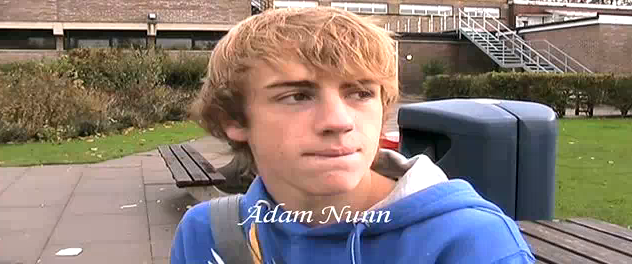
We also see the villain role, Dominic plays the villain who the camera zooms in on at the end of the clip, it's clear that he's a villain and as he is male, this goes with the theory that narratives are led by males as the villain is one of the main characters that lead the narrative. Lastly, we see that Adam is the bully who bullies Bronwen by the benches and then who looks distressed when she walks away sad, this hints at the possibility that Adam will eventually become the helper character that goes along with her.
In this short clip we do not get to see all the character roles but you can guess that there won't be a princess or father role as the romance in the film would be between Bronwen and Adam, there isn't a father involved and neither are a prize to the other.
We can see beginnings of a journey, we see something happening to spark the hero's journey - dominic, the villain appears from the shadows. I can guess that the story will follow the rest of the steps if it was feature length.

Levi Strauss
We can see clear binary opposites during the beginnings of the films, for example, male and female opposites - The are contrasts between the sexes straight away, Adam and his male friends are bullying Bronwen. We can also see binary opposites of popular and unpopular students Brownwen is clearly unpopular. There is also good and evil contrasts, good bronwen and evil Dominic.
Male and Female Contrast/ popular and unpopular

Good and Evil Contrast (Dominic by the tree in the background)

Tzvetan Todorov
We can clearly see the beginning structure of the film, it's introducing the characters and starting the film, you can expect to see the other parts of the films. We also see how our childrens film matches the theory because we want the underdog to win, Bronwen is unpopular and she is also the hero that will save the day.
There is also a state of equilibrium that we can see in the clip, we can see that the original equilibrium is that Adam bullies Bronwen and thats just the way it goes, the disturbance is them going on a journey and the new equilibrium is them living their normal lives as friends.
State of equilibrium when Adam is bullying with his friends

Wednesday, 30 March 2011

Thriller Analysis

Microelements:

Sound:
It starts off with a scary/spooky theme while the credits are going and high pitch sounds are added in to give a better effect. When the murder scene is happening to add emphasis and build tension. The music continues to play in the background until the characters start speaking. All the sound in this thriller is Non Diegetic  apart from the characters speaking.

Editing:
This group used their editing skills to take some of the colour away to make it darker and have a scarier effect.  At the beggining there is a slight fade after the logo to start showing the thriller. When the credits appear on the screen they have a thriller style to them. The way the title is appears at the end gives off a decoding effect to link with the thriller theme.

Mise-en-Scene:
In the this thriller there is not much lighting used to fit the dark theme of the thriller and so that the killers costume doesn't stand out as he is wearing dark clothing. Adam's character is wearing a white shirt to show that he is the good guy in the thriller and to make him stand out. There are many props used in this thriller such as the belt, reports and the suicide note to show that this is meant to be a psychological thriller. The location of the crime scene is meant to portray a dark warehouse at night time to show that Dom's character is alone is a dark and secluded area which builds tension when the murderer walks into the room.

Cinematography:
There is alot of close ups of the props to emphasise their meaning such as the  close up of the reports which is used quite often in thrillers to give off the story. In the scene where the note is being placed next to the body a hand-held shot is used to add mystery to the story of who the killer is. Shot reverse shot is used in the scene where the two characters are having a conversation. An over the shoulder shot is used when Adam is sleeping to build tension as a hand comes on screen hinting that it could be the killer.

SFX:
There is a quick blinding effect to show that the murder is either a flashback or dream to keep the audience guessing.